

PROGRAMME
Venue: C. D. Deshmukh Auditorium, India International Centre, Lodhi Estate, New Delhi
The Programme is subject to change.


Venue: C. D. Deshmukh Auditorium, India International Centre, Lodhi Estate, New Delhi
The Programme is subject to change.
MINI-INPUT: BEST OF PUBLIC TELEVISION FROM AROUND THE WORLD
SCREENINGS AND DISCUSSIONS
MINI-INPUT will showcase some of the best public service broadcasting films and programmes from around the world, exploring unconventional and new ways of telling stories. It will emphasise the role of documentaries in public service broadcasting and the ways in which the agendas of broadcasting need to and can be expanded in keeping with the digital revolution.
Iris Yudai and Deniz Sertkol will moderate the discussions around the films and programmes.
 Iris Yudai is an Executive Producer with the Canadian Broadcasting Corporation in Manitoba, responsible for commissioning and overseeing documentaries with independent producers and programming the summer TV series Absolutely Manitoba. She is also a trainer and mentor, regularly leading training sessions for television, radio and digital producers. She has extensive experience in facilitating development sessions for programmers and presenting workshops on writing and storytelling. She has also led the development and production of several radio programmes, on CBC Radio One.
 Deniz Sertkol works for the Film, TV and Radio Department of the Goethe-Institut Headquarters in Munich and is involved with monitoring and coordinating operations across various German public radio and public television companies. She has earlier worked at the Feature Film and TV Film Department at the Franco-German Channel ARTE G.E.I.E. and for several film festivals, including Berlinale Forum, Berlin Critics‘ Week and Filmfest Munich. She has also free-lanced as film critic for several years.
06:30 PM: INAUGURATION: ABHIJIT DASGUPTA | National Coordinator and Presenter, INPUT
Abhijit Dasgupta has been associated with news since the early 60s and with television from the early 70s. He is an alumnus of the Film and Television Institute of India and also trained at BBC London; AIBD Malaysia; NDR Germany and ABC Australia. His films have received two National and twenty eight international awards. Abhijit is the National coordinator for India and a past Board Member of International Public Television.

‘My father was born in a spring igloo—half snow, half skin. I was born in a hospital, with jaundice and two teeth.’ With quiet command, the young Inuk artist plunges us into a sublime imaginary universe – of luminescent, archive-inspired cinema that recast the past, present and future of Inuit in a radiant new light.
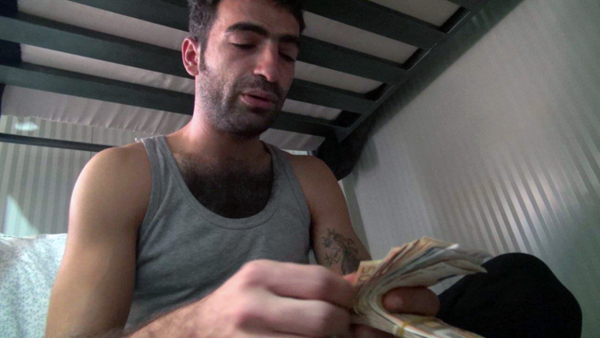
For the first-time, human smugglers reveal – on camera and unmasked – the secrets of their trade. The Film offers a real picture of the industry that has brought millions of migrants to Europe.
10:00 AM – TELLING REAL STORIES, USING TOOLS FROM FICTIONAL STORYTELLING
Real life drama can very often be hard to watch. How can experience with fictional storytelling be useful to the editing of documentaries? What tools can we use to spice up, soften, vivify, format, dramatise and dilute? How much does a documentary script alter the reality that was filmed? When will the audience start to doubt the documentary?
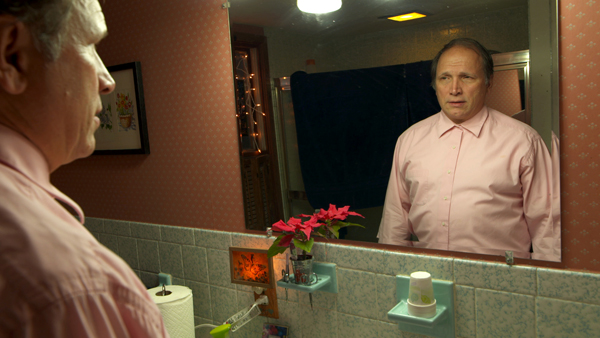
Denial follows the story of Dave Hallquist, CEO of a Vermont electric utility, seen through the lens of his filmmaker son Derek. As a self-described ‘closet environmentalist’, Hallquist is dedicated to addressing the way electricity use in America contributes to climate change. As he struggles to build an honest and transparent company, he realises he must apply that same transparency to his personal life and reveals to his son a lifelong secret. The chainsaw-wielding, hardhat-wearing CEO in a male-dominated industry, is a woman inside.
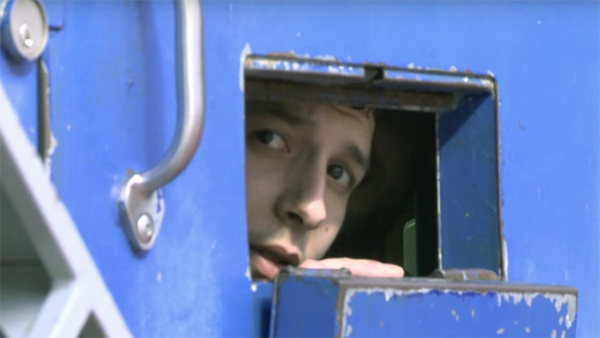
Israel’s most controversial series follows 1000 Palestinians held at the Megiddo prison in northern Israel, where they are guarded by 300 Israeli wardens. Unprecedented access to Megiddo for a year and a half, resulted in a series that documents the tense reality at the high security facility and the complex relationship between the prisoners and wardens, and especially between Fatah and Hamas leaders in the prison and the commanders of the prison itself.
01:30 PM – OPENING UP CONVERSATIONS
Documentary filmmakers sometimes initiate public discussion on subjects that are controversial or taboo. What are the successful ingredients that enable filmmakers to challenge the status quo and bring difficult topics to light?

The Film follows 29-year-old yoga instructor Jeremie Saunders as he lives openly with Cystic Fibrosis and looks for ways to remove the stigma attached to chronic illness and disease. His parents were told he would not see his 25th birthday. The Film traces the efforts by him and his two closest friends to create Sickboy, an irreverent Internet radio podcast aimed at changing the way people view serious illness like cancer, depression and epilepsy. The Documentary shows how a podcast that started as a joke among friends begins to have a transformative effect on its many listeners far and wide, and even on the podcasters themselves.
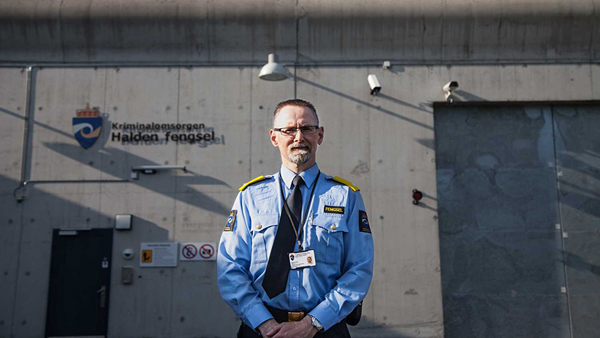
The deputy warden from the world’s most humane maximum security prison, Halden Prison in Norway, goes on a mission to change one of the most notorious prisons in the world – Attica Correctional Facility in New York State. Inmates describe the facility and atmosphere as predatory, aggressive and inhuman. How will the Nordic ideas about dialogue and humanity be received by staff and inmates in Attica? What type of treatment would you, as a citizen, be okay with?
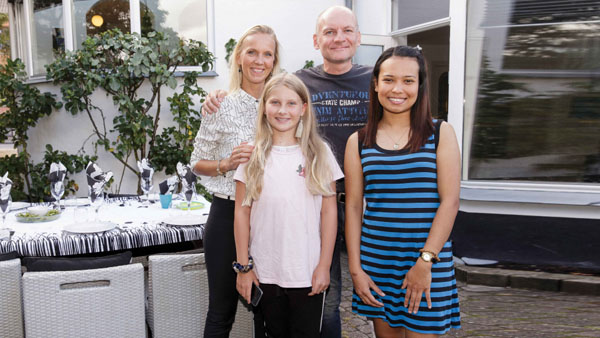
What happens when three well off women/ mothers from a Western country are sent to the rural Philippines to experience the life of their au pair and their families? For the first time in Denmark, a documentary filmmaker was given permission to film both the host families’ lives and the au pair girls’ lives for a longer period of time, sparking a huge debate.
05:00 PM – ILLUSTRATED TALK: STORYTELLING IN THE DIGITAL AGE
Social influencers are taking over the world. Young people with a huge number of followers are proving to be successful content producers on platforms like Instagram, Snapchat, YouTube and Facebook. They produce videos, share photos and start conversations and reach huge numbers of followers. We look at programming that they create, as public broadcasters learn from, compete with and collaborate with these digitally-native creators.
07:15 PM: SPECIAL INTERNATIONAL SHOWCASE
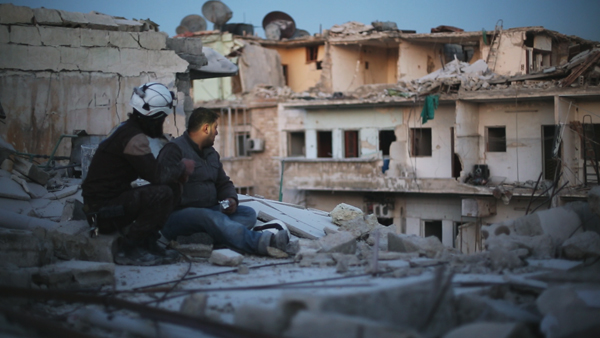
After five years of war in Syria, the remaining citizens of Aleppo are getting ready for a siege. Through a portrait of volunteers from the White Helmets, we experience daily life, death and struggle in the streets of the city. They fight for sanity where war has become the norm. Khalid, Subhi and Mahmoud are among the first to enter destroyed buildings, scouring through the rubble in search of bodies and signs of life. They struggle with the same dilemma as the other civilians: should they flee and bring their families to safety or should they stay and fight for their city?
World Cinema Grand Jury Prize, Sundance Film Festival
Oscar Nomination, Best Documentary
DOX: Award, CPH:DOX
Grand Jury Award and Inspiration Award, Durham, Full Frame Film Festival
Best Documentary, Sarasota Film Festival, USA
Grand Prix and Audience Award, Warsaw, Poland
Grand Jury Award, Minneapolis/St. Paul International Film Festival
Best International Feature – Special Mention, Documentary Edge Festival, Auckland
Audience Award, Washington DC International Film Festival
International Documentary Film Festival, Amsterdam
Hot Docs International Documentary Festival, Toronto
Taipei CNEX Documentary Film Festival
Athens International Film Festival
EBS International Documentary Festival, Seoul
Edinburgh International Film Festival
Sydney Film Festival
South African International Documentary Film Festival, Cape Town
Docsbarcelona
Dok. Fest, Munich
Istanbul International Film Festival, Turkey
Amnesty International Movies that Matter Festival
Feras Fayyad is a Syrian film director, producer, writer, editor and cinematographer, best known for Last Men in Aleppo, which earned him critical acclaim and numerous awards and nominations, including the Academy Award for Best Documentary Feature, making him the first Syrian director to be nominated for an Oscar.
10:00 AM – MINI-INPUT

Three whistleblowers break the silence around the secret U.S. drone war. Plagued by guilt over participating in the killing of faceless people in foreign countries, two courageous women, a drone-target analyst and a retired intelligence officer, decide to risk the consequences and speak out.
11:30 AM – MEET THE MASTERS: CONVERSATION ON DOCUMENTARY FILMMAKING
Rajiv Mehrotra with Adoor Gopalakrishnan and Shyam Benegal
Dada Saheb Phalke Award Winners and Trustees, PSBT
02:00 PM – INCLUSION/ VISIBILITY
We screen two programmes from Japan, both aimed at opening up a conversation. They challenge misconceptions about people with disabilities. But their approaches are completely different. One is an intimate personal story. The other, a lively entertainment show. Which is more engaging? Which is more thought-provoking? Which has most impact? You decide.
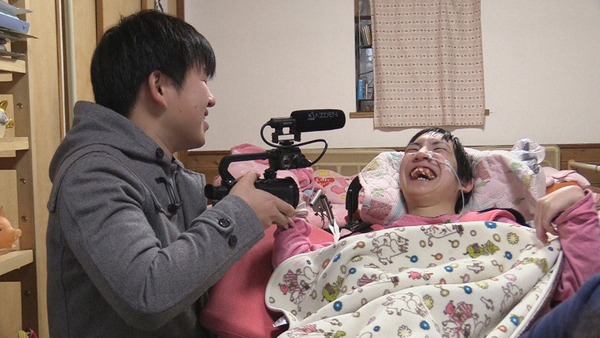
In July 2016, a stabbing rampage left 19 people dead at a care home for those with disabilities. The attacker claimed that people with disabilities only bring misery. His words shook NHK director Yuya Sakagawa to the core, whose younger sister Ayumi has cerebral palsy and can barely speak. Yuya returns home, becomes Ayumi’s carer for a month, and films the whole experience, to prove the attacker’s assertions wrong. The Film follows Yuya as he struggles to forge a new relationship with Ayumi and other members of the family.

A barrier-free entertainment in which 100 people with disabilities engage in honest, lively discussion with entertainers. At the end, they judge whether the entertainers deserve the Most Zero Knowledge title for misconceptions about them. The production team consists of people with and without disabilities, resulting in an outspoken form of variety show with much realism and honesty to question people’s attitude towards people with disabilities.
04:45 PM – VISUAL STORYTELLING
How do we sharpen the visual aspects of our stories? We study films which score high on the ‘mute factor’, where visuals are carefully composed and ordered to convey emotion and narrative even with the sound off. They use very different techniques and approaches to engage – and sometimes entrance – the audience.
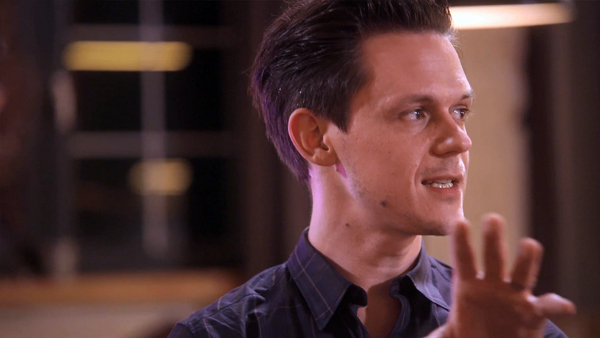
The world seems in disarray. Populists from the far right and left are conflicted in a heated, political debate in Europe. The existing electoral system is becoming shaky. Whether on the street, in the family or on the Internet – the fronts are hardened. An unusual experiment takes its course. Shortly before the German general election, the makers of this Film put three voters and one politician together for one day. The twist: The voters oppose all general opinions of the politician they’re faced with.
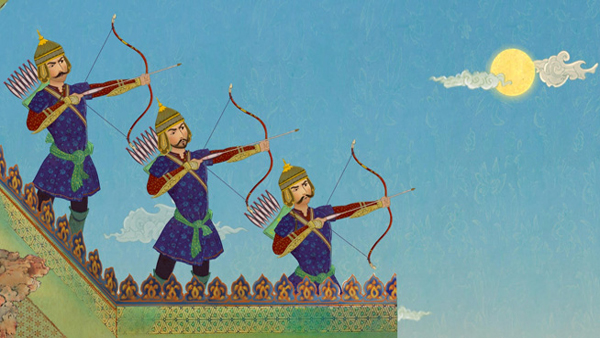
Taking inspiration from historic illustrations, the film is an animated fable.
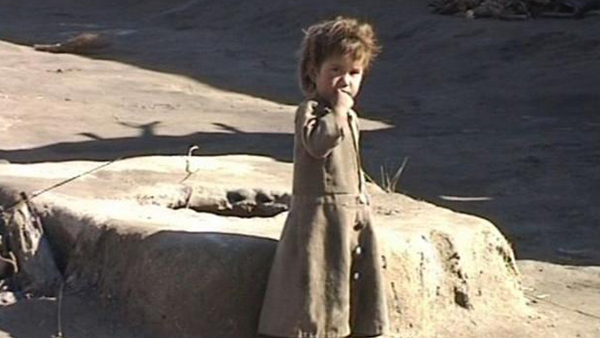
A donkey drags an artillery shell through an island, connecting small stories of people who fled the war.
06:30 PM: PSBT-DOORDARSHAN FILM SCREENINGS’ INAUGURATION
07:00 PM: ANTHROPOCENE RELOOKED | Vipin Vijay | 54 min. | 2018
Followed by Q&A with the Filmmaker
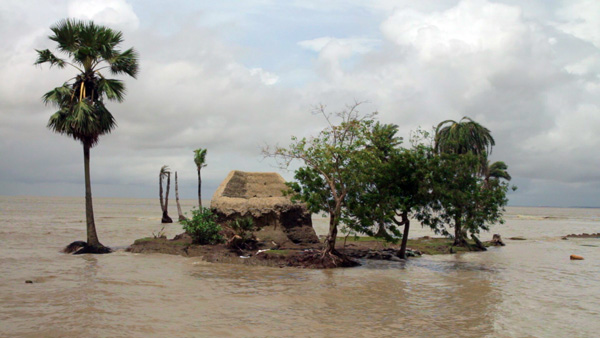
The problems that the Anthropocene poses are those that have forever been at the heart of humanistic inquiry: what does life mean in the face of death? A video essay on the Ghoramara low–lying islands, quickly disappearing due to erosion and sea level rise – in the process, also documenting the disappearance of its grassroots imaginaries.
Vipin Vijay’s works are made under independent codes and defy any categorisation, merging film, documentary, essay and fiction, all into one. His works have won international and national recognition, having been showcased at festivals like Rotterdam, Karlovy Vary, Oberhausen, and art museums including Serpentine Gallery, London; Ullens Centre for Contemporary Art, Beijing, and Centre Georges Pompidou, Paris. The prestigious Oberhausen Festival, Germany, honored him with a Profile. Vipin is currently working on his third fiction feature film.
10:30 AM: KOI CHAND BHI NAHIN (THERE IS NO MOON) | Ajay T. G. | 26 min. | 2017
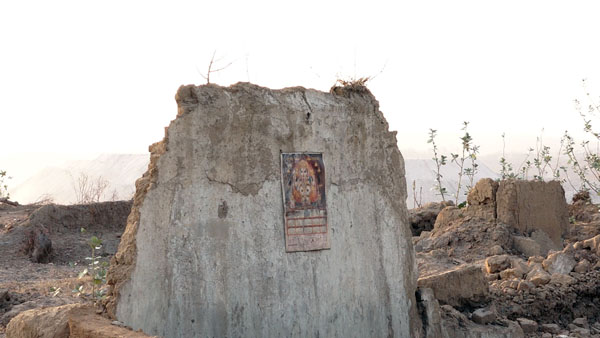
The Film bears witness to the gross neglect of environmental and human rights in Chhattisgarh. Based on the testimonials of one Adivasi family affected by development, it reveals how homes are demolished and rich agricultural land looted.
Ajay T.G. is an independent filmmaker who has worked in varying capacities – as Producer, Director, Cameraperson and Editor – for 20 documentary films. His films include Andhere Se Pehele, Peheli Aavaaz and Living Memory, which have been screened variously. He is a human rights activist and a researcher on projects related to industrialisation, caste and labour and agrarian change in the context of development, whose photo-exhibition Potters in Chhattisgarh was hosted at Shepherd’s Bush Public Library and Hammersmith Public Library, London.
11:00 AM: THE CALL OF KANDADHAR HILLS | Tarun Kumar Mishra | 27 min. | 2018
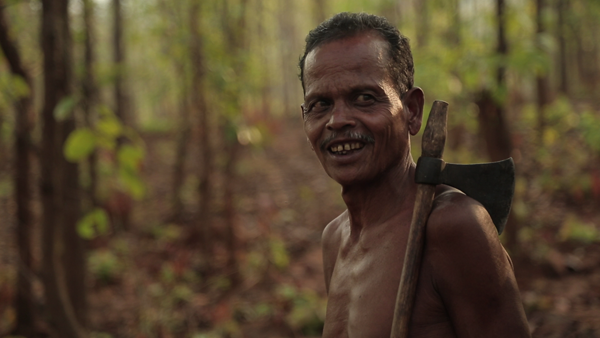
The primitive Paudi Bhuinyas of Khandadhar Hills in Sudergarh of Odisha have grown up in a culture of co-existence with trees, rivers, streams, animals and birds, all which are now threatened. Their Maha Sardar, Bilua Naik, articulates with wisdom, the agonies and anguish of Khandadhar, in a language difficult to ignore.
Tarun Kumar Mishra has a Master’s in Performing Arts from Utkal University, Bhubaneswar. Tarun began his journey as a cameraperson and soon began directing films of his own. He has contributed to the making of over 25 documentaries by Samadrusti and an ecological biography in association with the University of Toronto.
11:30 AM: IF SHE BUILT A COUNTRY (AGAR WHO EK DESH BANATEE) | Maheen Mirza | 56 min. | 2018
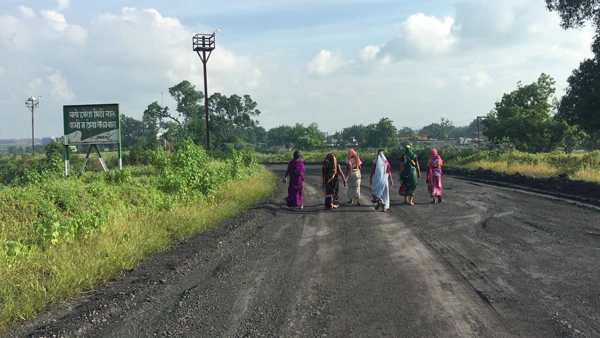
The Film looks at how rural, adivasi working class women living in the villages of Raigarh, Chhattisgarh, understand, define and envisage development, as mines and power plants appear and grow in monstrous proportions around them. It showcases how their relationship with the forest and land is being impacted and how they seek justice for themselves and their communities.
Maheen Mirza is a cinematographer and works with collectives, organisations and peoples’ groups, and films with them on socio-political and academic issues. She has shot fiction, documentary and academic films across India.
Ajay T.G., Farah Naqvi, Maheen Mirza, Tarun Kumar Mishra, Uma Chakravarti, Usha Ramanathan
02:30 PM: SPECIAL PACKAGE: ENGAGING WITH SEXUALITIES
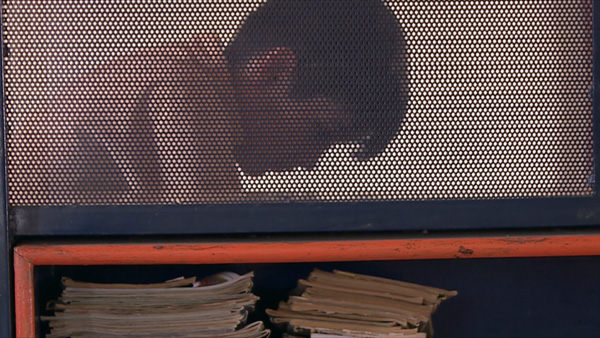
Narrated through the voice of a young person from a progressive South Delhi school, straddling the binary worlds of genders, the Film demonstrates the importance of a supportive environment created by adult and peer allies.
Navdeep Sharma studied English Literature at Hindu College before training in documentary filmmaking at AJK MCRC, Jamia. His consistent interest in exploring issues surrounding gender expression and identity, sexuality and gender justice is reflected in the choice of themes for his work both as practitioner and media researcher. His films include Finding Juliana in Delhi/ Dilli and River, Interrupted.

The Film explores the intersections between identity, sexuality, mental health and the many alleys through which women negotiate freedom and dignity.
Anushka Shivdasani Rovshen’s independent film work explores conditions of the human mind. Her films have been screened at several international festivals, including Karachi, Amsterdam, Torronto and Prague.
Madhuri Mohindar has directed various documentaries exploring immigration, race and gender, including Can’t Hide Me on women fighting invisible barriers, which has screened at New York, LA, Kenya and Afghanistan. She has created award winning multimedia campaigns and documentaries in India and the US for various non-profits.
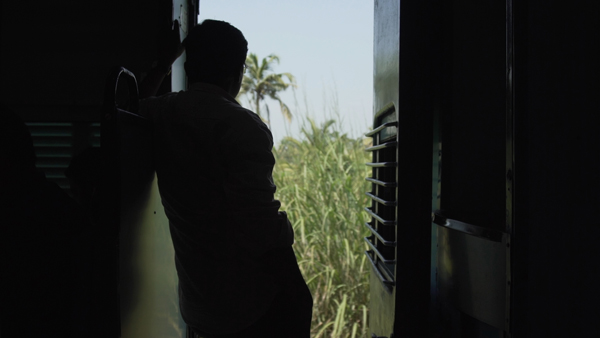
The Documentary explores the relationship between one’s gender and migration.
Ajita Banerjie is a researcher on gender and sexuality rights based in New Delhi. This is her first film.
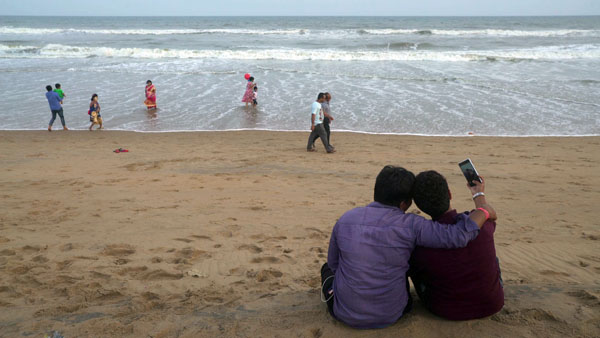
The Film is a light-hearted take on the lives of a transman and a lesbian woman, as they reflect on their loves, crushes, desires, dating experiences, friendships and intimate relationships.
Rituparna Borah and Ritambhara Mehta are part of Nazariya, a Delhi-based queer feminist resource group working on issues of gender and sexuality, with a focus on lesbian, bisexual, queer, genderqueer, non-binary people assigned gender female at birth, and transmen.

The Documentary juxtaposes personal narratives of cruising from the LGBTQ community, against diverse visuals of Indian public spaces, revealing different facets and complexities of urban cruising.
A Direction graduate from the Film and Television Institute of India, Anindya Shankar Das is a filmmaker and photographer involved in all aspects of film technology. He is especially keen on exploring the themes of culture and ecology. He has shot and edited a number of documentaries, music videos, experimental and short films and is currently working on the script of a feature length film.
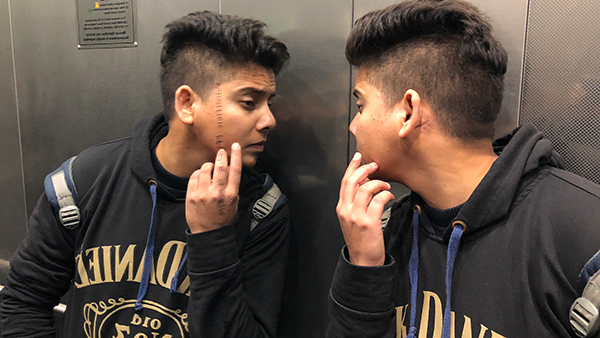
Thousands board and de-board the Delhi Metro, encountering many faces, expressions, voices, bodies and odours, all of which narrate a distinct story. The Film is a journey with one such passenger, Anshuman, reclaiming public space and his own self.
Mitali Trivedi has a Master’s in Gender Studies from Ambedkar University, Delhi, and is a research scholar at the Department of Sociology, University of Delhi. She is involved in theatre and has been working with Abhigyan Natya Association – a theatre organisation for over half a decade.
Gagandeep Singh is a lawyer and theatre practitioner. He is deeply interested in the historical evolution of laws and holds a Master’s Degree in Environmental Law.
PANEL DISCUSSION
Ajita Banerjie, Anindya Shankar Das, Anushka Shivdasani Rovshen, Avijit Mukul Kishore, Gagandeep Singh
Madhuri Mohindar, Mitali Trivedi, Ritambhara Mehta, Rituparna Borah, Vani Subramanian
05:30 PM: ONE MUSTARD SEED: CONVERSATIONS ON DEATH, AND DYING | Aparna Sanyal | 41 min. | 2018
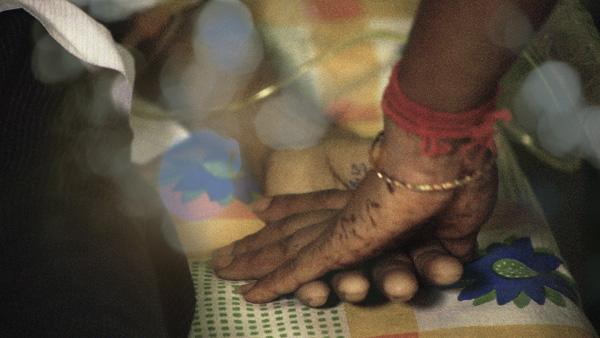
Why do we have such a contentious relationship with the idea of dying? What keeps us from looking at death, or the dying, in the eye, from making peace with the process? The Film wonders if the process of dying can become meaningful and if embracing our own mortality might be the key to a more fulfilling life.
Aparna Sanyal is a National Award winning filmmaker who has worked extensively on documentaries and TV shows for both Indian and international television. She was a Charles Wallace India Trust Fellow for research in the UK and recognised as a Young Creative Entrepreneur by the British Council. Her films include Tedhi Lakeer – The Crooked Line, A Drop of Sunshine, A Land, Strangely Familiar, Shunyata – when Kathak met Cham, Shovana and The Monks who won the Grammy.
7:30 PM: PEACOCK PLUME | Shabnam Sukhdev | 51 min. | 2018
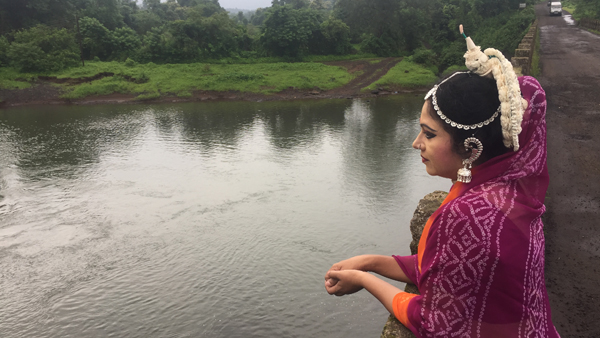
A personal documentary celebrating Indian classical dancer Shubhada Varadkar’s indomitable spirit as she wins her battle with cancer and overcomes heartbreak with the gift of her dance.
An alumnus of the Film and Television Institute of India, Shabnam Sukhdev has worked in the Mumbai film and television industry in the capacity of writer, director and producer of television shorts and serials for over two decades. Issues of identity, culture, environment, mental health and human rights concern her deeply and are reflected in her work. She won the National Award for her feature length documentary on her father, the renowned documentary filmmaker, S. Sukhdev.
10:15 AM: MERE DESH KI DHARTI | Sumit Khanna | 60 min. | 2006
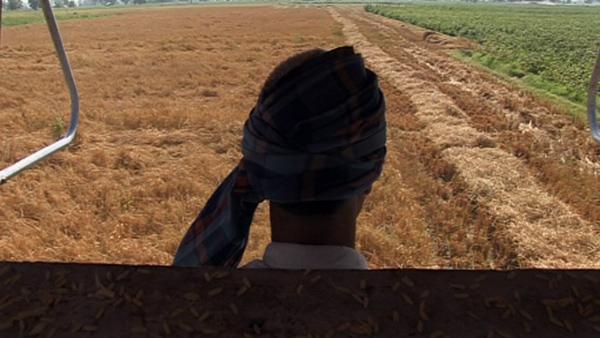
In our effort to achieve food security, have we compromised on food safety? The Film investigates the impact of pesticides as they enter the food chain.
National Film Award, India
International Media Festival, Geneva
Eco Art Festival, New Delhi
Quotes from the Earth, Traveling Environment Film Festival
Development Film Festival, Madurai
ViBGYOR International Film Festival, Kerala
Toxics Links Film Festival
International Film Festival, Pune
7Islands International Film Festival, Mumbai
Konark Film Festival, Orissa
Sumit Khanna started his career working as an assistant to directors Aziz Mirza, Saeed Mirza and Meghna Gulzar on various feature films and documentaries. His first independent documentary was on the lives of assistant directors in the Mumbai film industry. Since then, he has made numerous documentaries and was associate producer on the acclaimed film Parzania. He is the recipient of two National Awards.
11:15 AM: INDIA’S HEALING FORESTS | Nitin Das | 51 min. | 2018
Followed by Q&A with the Filmmaker
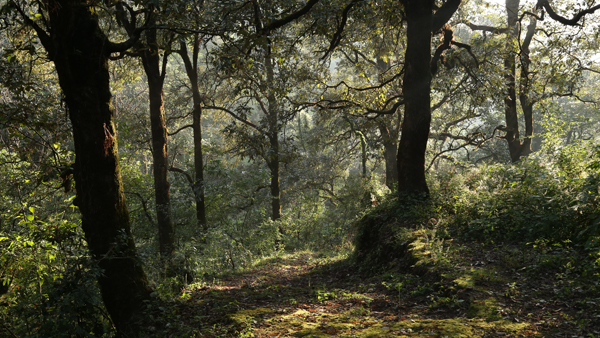
The film unfolds through inspiring stories of people whose lives are intricately woven with forests. Through their experiences we explore the amazing ways in which nature affects our body, mind and spirit.
Nitin Das is an alumnus of IIM Lucknow, who worked in the corporate sector for five years. He studied filmmaking at New York and has an interesting repertoire of films to his credit. He is an Asia Society Fellow, being one amongst 21 people chosen across Asia each year. He has also won a special award by the British Council for creative entrepreneurship in the social sector.
12:30 PM: BANARAS PINK | Pearl Sandhu | 26 min. | 2018
Followed by Q&A with the Filmmaker
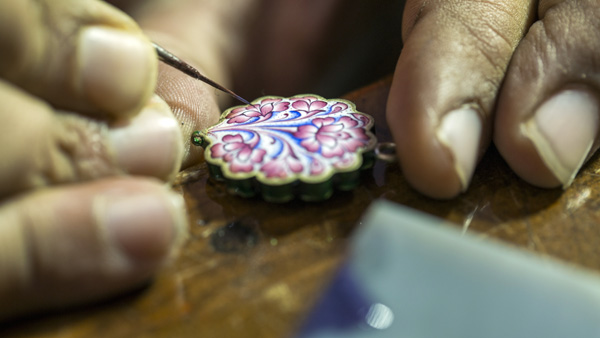
The Film tells the story of Meenakari, which fused with the pink of Banaras to evolve into a unique craft and aesthetic tradition – the Gulabi Meena. Through the metaphor of the city of Banaras and how it changed over the years, affecting every tangible and intangible thing that flourished in it, the Film explores its rich history. Jeweller and bon vivant Banarasi, Raman Shankar Pandya narrates the nostalgia of some of those masterpieces, of the craftspeople and living in times that may never return in this era of capitalisation and market forces.
A post-graduate in Mass Communication from Jamia Milia Islamia, Pearl Sandhu is a freelance media professional based in Delhi. She has a decade of experience of working in various capacities as Director, Producer and Line Producer for films, television and new media. She has worked for NDTV Goodtimes, National Geographic, Star Plus and TV18 and made internationally acclaimed documentaries, advertising and online films.
02:15 PM: A STICKY WICKET | Yasmin Kidwai and Fazal Kidwai | 48 min. | 2018
Followed by Q&A with the Filmmaker
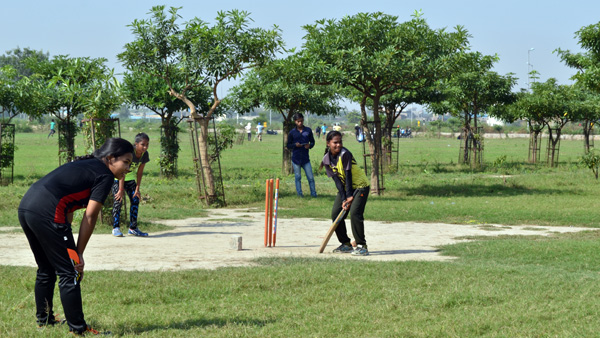
The Film is about a group of girls who live in Shahbad Dairy, on the outskirts of Delhi, bound by tradition, social norms, gender and crime that infests the area. Toilets are a luxury and evening meals banned. In the midst of their daily routines of cooking, cleaning and looking after younger siblings, enters cricket and gives them hope and wings to fly.
Yasmin Kidwai is a Delhi-based award-winning documentary filmmaker. In the last 19 years, she has made almost 50 films. Yasmin has focussed on rural and social development issues and her work has affected changes in government policy and pioneered methods of funding and showcasing films. Yasmin’s last film, No Problem! Six Months with the Barefoot Grandmamas, was nominated for over 20 awards and citations worldwide, and was voted Best Film at various film festivals.
Fazal Kidwai has been involved in filmmaking for the past eleven years. A graduate from the Xavier Institute of Communications, Mumbai, Fazal has a wide range of experience, from documentary films to television shows, ad films to advocacy films. He has worked in various capacities including producing, directing and casting.
03:45 PM: KAITHI – EK ITIHAAS | Sridhar Sudhir | 28 min. | 2018
Followed by Q&A with the Filmmaker
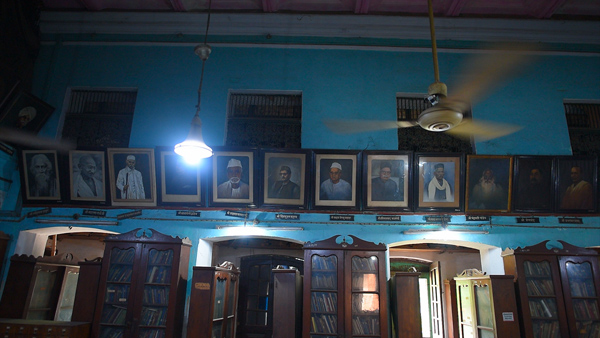
The Film looks into the now-lost script Kaithi, widely used in Bihar and other parts of North India, and traces its gradual demise and present-extinction. It draws parallels between its history and contemporary Bihar, delving into important milestones of Indian history. It looks at the relationship of a people with their language, and a language with its script, and how one could look back at one’s own history and find patterns and instances that can provide valuable insights to positively impact our present.
Shridhar Sudhir is a post-graduate of Film and Video Communication from the National Institute of Design, Ahmedabad, and Visual Communication from College of Art, New Delhi. He spent part of his early years in a residential school in Pilani and then in Varanasi, which provided him diverse exposure and experiences. He makes films which resonate with contemporary issues and enjoys travelling, photography, art, playing sports, listening to music and watching films, among other things.
04:45 PM: RANG MAHAL (COLOUR PALACE) | Prantik Basu | 26 min. | 2018
Followed by Q&A with the Filmmaker
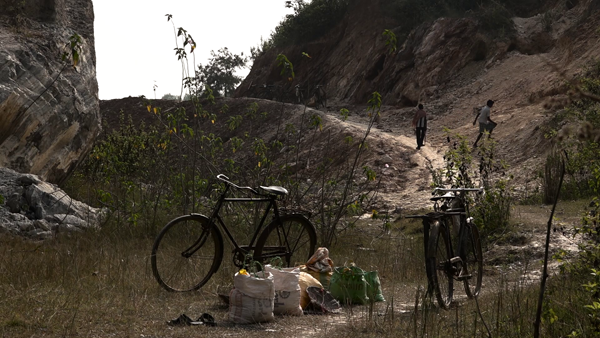
Until recent years, the Santhali tribe of India did not have its own written language. Their stories and myths were preserved and passed on orally through the generations. Each narration has a different form, much like the rocks of a nearby hill that come in various hues. Never seen and only heard, a woman from the community narrates a tale about the origin of creation and how the first house was built.
Prantik Basu studied Film Direction at the Film and Television Institute of India, after completing his graduation in English Literature. His films have been screened at various festivals including Oberhausen, Rome, International Festival of India and Experimenta India. His film Ek, Do was awarded the Jury Prize at the Mumbai International Film Festival and his latest short Sakhisona won the Tiger Award for Short Films at Rotterdam.
05:30 PM: AAJ SCHOOL JAVANU CHE TAMARE? (ARE YOU GOING TO SCHOOL TODAY?) | Anupama Srinivasan | 58 min. | 2018
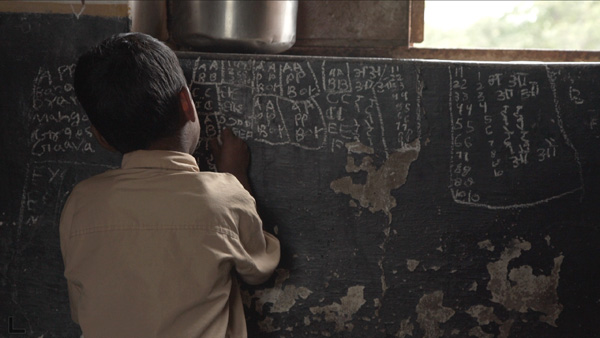
The Film takes us to rural schools in the predominantly tribal district of Dungarpur in southern Rajasthan. With two Government school teachers as focal points, it explores the challenges of being a teacher and a student in fairly adverse circumstances. Children come from difficult contexts with very limited material resources, absentee fathers and younger siblings to attend to. How do teachers respond to this situation? How do they bring children to school and create an environment in which they are motivated to learn?
Anupama Srinivasan is a freelance filmmaker based in Delhi. An alumna of Harvard University and FTII, she has been making documentaries for the past 17 years, often shooting and editing her own work. Her films I Wonder…, On my Own and On my Own Again have been screened at various film festivals, including Yamagata, Biarritz, Mumbai, Madrid and Karachi. Nirnay, which she co-directed and edited won the Most Innovative Film Award at MIFF. Anupama was the Director of the IAWRT Asian Women’s Film Festival for three years (2013-15), and of the Peace Builders International Film Festival in 2016.
06:30 PM: PANEL DISCUSSION
Anita Rampal, Anupama Srinivasan, Aparna Sanyal and Radhika Menon
07:30 PM: KOOTHU | Sandhya Kumar | 53 min. | 2018
Followed by Q&A with the Filmmaker
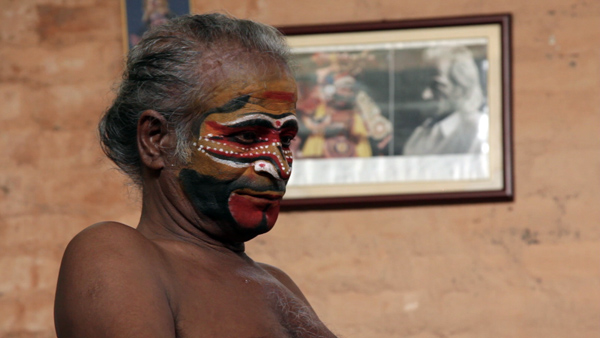
Koothu, a living theatre tradition from Tamil Nadu, brings to life stories about gods, demigods, kings and demons from Indian epics. During the festival season, many koothu companies tour the countryside, often commissioned by villages to perform for several consecutive nights. Despite its enduring rural popularity, because of its low-caste associations, koothu struggles to find place and patronage in urban art circles. The Film delves into the art, aesthetics and politics surrounding koothu through the work of two koothu masters, P. Rajagopal and Sambandan Thambiran.
Sandhya Kumar is a Film and Communications graduate from the San Francisco Art Institute and Jamia Millia University. Her documentary O Friend, This Waiting! won the National Film Award for its unconventional exploration of the Devadasi tradition in South India. Sandhya’s films have travelled in India and internationally, with screenings at Mumbai, Berkeley, San Francisco, Kathmandu and Trivandrum. She has received film grants from the India Foundation for the Arts and PSBT and been an ATSA fellow at ARThink South Asia. Sandhya is a trustee of Vikalp Bengaluru, a filmmakers’ collective committed to creating platforms for documentary films to reach wider audiences.
10:00 AM: NAACH BHIKARI NAACH | Jainendra Dost and Shilpi Gulati | 72 min. | 2018
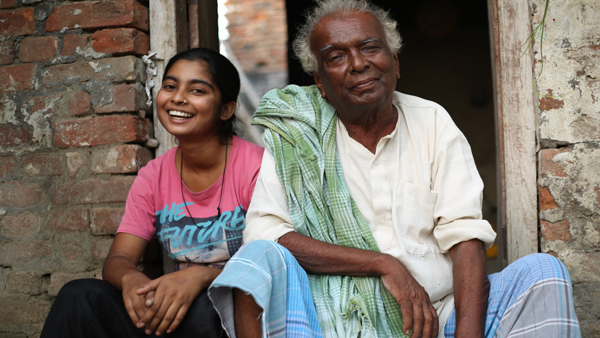
The Film captures the lives of four Launda Naach performers, originally a part of Bhikhari Thakur’s legendary Naach troupe in Bihar. It weaves the journey of a folk tradition that along with song, dance and drama, includes the practice of female impersonation by male actors. As the protagonists narrate their life stories, they provide an insight into the politics and aesthetics of the works of ‘the old man’ – the ‘Shakespeare of Bhojpuri’.
Gold Award, Jakarta International Festival
Jecheon International Festival, Seoul
Jagran Film Festival, Varanasi
Jainendra Dost is a doctoral scholar at the School of Arts and Aesthetics, Jawaharlal Nehru University. A theatre practitioner for over 18 years, Jainendra is the Director of Bhikhari Thakur Repertory Training and Research Centre, working towards the revival of folk theatre in Bihar. His work has been supported by India Foundation for the Arts and the Ministry of Culture.
Shilpi Gulati is a filmmaker and researcher based in Delhi. Her body of work largely engages with themes of gender, performance and oral traditions in India. Her documentary Qissa-e Parsi won the National Film Award and Inside Out, Dere to Delhi and Taala Te Kunje have been screened at various festivals internationally. Shilpi is a Fulbright scholar and is currently pursuing her PhD at Jawaharlal Nehru University.
11:15 AM: VAIKHARI | Lubdhak Chatterjee | 59 min. | 2018
Followed by Q&A with the Filmmaker
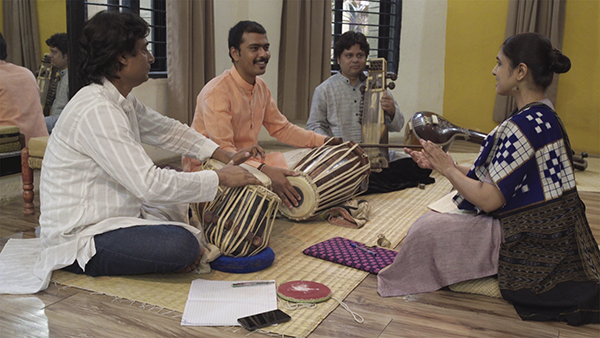
Vaikhari focuses on padhant, the art of recitation of mnemonic syllables used in Indian classical percussion and dance. It follows Parwati Dutta’s journey as she choreographs the epic Meghdootam, and observes the stages of artistic contemplation with special emphasis on the theoretical and practical aspects of padhant involved in the conversion of the essence of literary stanzas into their rhythmic analogues – in symphony with the tabla, pakhawaj, sarangi and sung verses.
Lubdhak Chatterjee is an independent filmmaker based in Delhi. After having pursued a Master’s in Engineering, his love for different art forms found its confluence in cinema, leading to his first short In a Free State, which got screened at different national and international festivals. Vaikhari is his first non-fiction film.
12:30 PM: DECODING SHANKAR | Deepti Pillay Sivan | 58 min. | 2018
Followed by Q&A with the Filmmaker
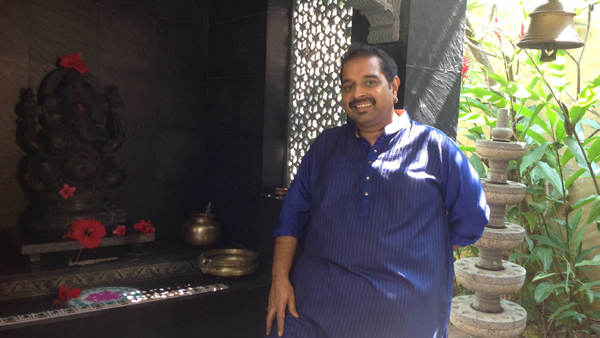
Decoding melodies and songs, the Film is an account of Shankar Mahadevan’s tryst with music. Featuring decisive moments that shaped his life and musical sensibilities, it focuses on how he balances life as a singer, music composer, teacher and family man, stealing moments to pursue other passions.
Deepti Pillay Sivan is a Law graduate with an MBA, who has been an actor, model, anchor and television host. She has worked on documentaries for National Geographic Channel, Al Jazeera and PSBT, among others, as Production Designer, and non-features for the Government of India. She worked as Programming Head for the Sun TV Network, commissioning fiction and non-fiction content.
02:45 PM: WANING MOONS | Nooryaab Nakhat | 28 min. | 2018
Followed by Q&A with the Filmmaker
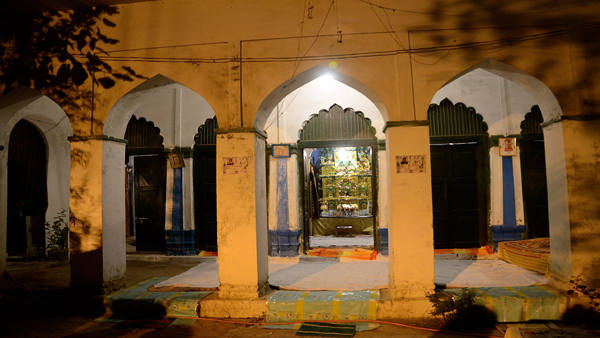
A personal document of Agha Mohammed Nasir Abbas Maliki and his sister, Naaz Abbas, and their cherished history as descendants of Nawabs, the story captures a nostalgia for the past, residing in the heart of the city of Lucknow.
Nooryaab Nakhat has a keen interest in literature, painting and theatre. A graduate in English from Lady Shri Ram College, she pursued her Master’s in Mass Communication from Jamia Millia Islamia, followed by Screenplay Writing from the Film and Television Institute of India. She has since been in Pune, scripting and directing films.
03:30 PM: PICHLA VARKA (THE PREVIOUS PAGE) | Priyanka Chhabra | 60 min. | 2018

Dadi and her friends share a common history – of being Partition refugees who came to India after the state of Pakistan was created, and eventually settled in the capital of Delhi. They remain the last generation of people who can ever tell us what the partition of Punjab was like, or what pre-partition India was like. Pichla Varkha looks at the experiences of ordinary women who experienced the violence and uncertainty of leaving their homeland, their mulk, to enter a new country in 1947. How does history play out in ordinary lives?
Priyanka Chhabra’s work explores themes of memory, time, landscape and relationships of people to places. Her previous works include A Summer Flu, Shape of Trees, Shame was a Place Inside, Oranges and Mangoes and The Furnished Room. Her work has been exhibited at Oberhausen, Rotterdam, York and Mumbai. She currently lives and works between Delhi and Manali.
Followed by a conversation between Priyanka Chhabra and Uma Chakravarti.
05:00 PM: PANEL DISCUSSION: A VOICE OF MY OWN: DOCUMENTARY CONVERSATIONS
Discussion with young and mid-career documentary filmmakers about the art, politics and practice of the documentary.
Prantik Basu, Priya Thuvassery, Priyanka Chhabra, Reena Mohan
Saba Rehman, Sandhya Kumar, Sridhar Sudhir
06:15 PM: SQUEEZE LIME IN YOUR EYE | Avijit Mukul Kishore | 60 min. | 2018
Followed by Q&A with the Filmmaker
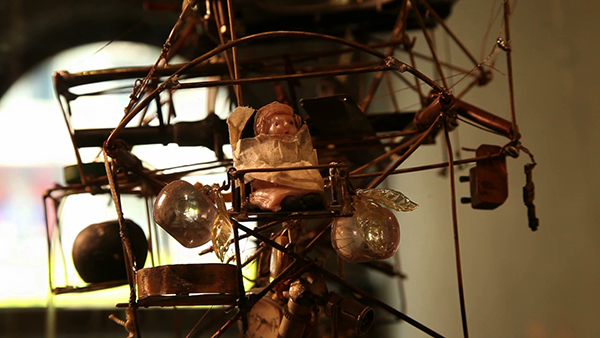
Discarded and broken household gadgets that are disassembled. Their incongruous parts paired in unexpected combinations to create cyborg-like creatures that occupy the space between machine, toy and home. This is the work of acclaimed visual artist Kausik Mukhopadhyay. His objects have distinct personalities and quirks. They are humorous, noisy and sometimes break down. There is a sense of the unexpected, as they invite the viewer to engage and complete the embedded narratives within them – narratives that contain fragments of political, personal and art history. Ultimately, there is as much beauty, as there is gentleness, joy and melancholy in Mukhopadhyay’s work.
Avijit Mukul Kishore is a filmmaker and cinematographer, who works in different genres of filmmaking, with special interest in the documentary and interdisciplinary moving-image practice. He is actively involved in cinema pedagogy and works as a curator of film programmes. His films as director include Nostalgia for the Future, Vertical City, Electric Shadows, Certified Universal and Snapshots from a Family Album. His films as cinematographer include Kumar Talkies, Kali Salwaar, John and Jane, Seven Islands and a Metro, Bidesia in Bambai, I am Micro and An Old Dog’s Diary.
CLOSING FILM
THE DEATH OF US | VANI SUBRAMANIAN | 76 MIN. | 2018
Followed by Q&A with the Filmmaker

The debates on the death penalty today are marked by a cacophony of strident assertions. Going against this tide is The Death of Us – a quiet contemplation on a range of cases in which the death penalty was pronounced, ending in execution, commutation to life sentence, acquittal or even pardon. Speaking only to those who have been on death row or those very closely involved with the cases, we engage in complex conversations on crime and punishment, revenge and justice, popular rhetoric and personal experiences. Only to find ourselves confronting larger ethical and moral questions across time and space.
One-time advertising writer, Vani Subramanian has been a women’s rights activist and documentary filmmaker since the nineties. Her work as a filmmaker explores the connections between everyday practices and larger political questions, be they in the areas of culture, food production, primary education, urban development, communalism, sex selective abortions or matters of identity embedded in our food practices. Her films have been screened, and received awards, both nationally and internationally. More recently, Vani has extended her practice to video art in performance, as well as a mixed media installation.